Nakba-NLP 2026

The 2nd International Workshop on Nakba Narratives as Language Resources

Part of the LREC-2026 Workshop

Palma de Mallorca, Spain (Hybrid Workshop)

11, 12 or 16 May, 2026

Overview

The narratives of the (ongoing) Palestinian Nakba possess significant historical, cultural, literary, and academic value. Preserving this content and empowering it with AI tools is crucial for ensuring its accessibility and usability for present and future generations. Nakba narratives and testimonies exist in diverse formats such as manuscripts, books, audio recordings, novels, and films. Converting this content into a machine-understandable format presents a notable challenge. Establishing accessible archives and well-annotated collections is essential for researchers and historians to verify and share meaningful information.

This workshop aims to explore how artificial intelligence, natural language processing, and corpus linguistics can assist in understanding, disseminating and preserving, Nakba narratives and testimonies. The goal is to create accessible, comprehensive, and well-annotated collections that empower researchers and historians to validate and share critical insights derived from these data. The workshop targets datasets and narratives in Arabic, English, and other languages, however, submitted articles should be written in English.

Previous Workshops:
NakbaNLP-2025 (Webpage, Accepted Papers, Video Recordings)


Call for Papers

We invite contributions on all aspects of building and applying language resources for Nakba narratives, including but not limited to:

  • Digitisation of oral and written materials
  • Corpus creation, annotation, and datasets
  • Digital archives, metadata, and mark-up
  • Annotation tools and standards
  • Classification, retrieval, & topic modelling
  • Entity recognition, & relation extraction
  • Event & argument extraction
  • Knowledge graphs, ontologies, and linked data
  • Machine translation
  • Summarisation, and paraphrasing
  • Language generation and large language models
  • Sentiment, stance, and emotion analysis
  • Bias, misinformation, and hate speech
  • Speech recognition and voice technologies
  • Palestinian dialects (spoken and written)

Participants are encouraged to draw on existing archives such as the Institute for Palestine Studies, the The Palestinian Museum, Nakba-Archive, POHA, Al-Haq, ICHR, as well as open resources like Wikipedia and Wikidata.


Submission Details

All submitted papers must clearly state and explain their relevance to the topic of ‘Nakba Narratives as Language Resources’. The organisers reserve the right to reject any papers that incite hatred, refute established facts, or undermine the suffering of individuals.

We follow the LREC 2026 standards for submission format and guidelines, submissions may be of two types:

  • Long papers – up to eight (8) pages maximum, presenting substantial, original, completed, and unpublished work.
  • Short papers – up to four (4) pages, describing a small focused contribution, negative results, system demonstrations, etc.


Submission URL: Please submit here.

Important Dates

Key Dates (Provisional)
  • Submission Deadline: 20 February 2026
  • Notification of Acceptance: 11 March 2026
  • Camera Ready paper submission Hard Deadline: 30 March 2026
  • Workshop Date: 11, 12 or 16 May, 2026

Welcome Message from the Organizers

Welcome to the Nakba Narratives as Language Resources workshop!

This workshop explores how natural language processing (NLP) tools can contribute to the documentation and understanding of significant historical events. Similar to other initiatives such as the Holocaust Testimonies as Language Resources workshop at LREC-COLING 2024, we aim to examine the intersection of language, technology, and social good - an essential and growing area of research.

We recognize that topics like the Nakba may be viewed as sensitive or politically charged. However, addressing such issues is not unprecedented in NLP. Research on socially significant topics, including gender bias, propaganda, and historical testimonies, often intersects with political and cultural discourse. Such efforts are widely recognized as essential for advancing NLP as a field. Similarly, this workshop seeks to foster rigorous and inclusive exploration of narratives surrounding the Nakba.

We are committed to fostering an inclusive and respectful environment where diverse perspectives are welcomed and all opinions can be expressed and discussed in an academic and constructive manner. Open dialogue is at the heart of our approach, and we value thoughtful contributions from every participant. This workshop adheres to the Diversity, Inclusion, and Anti-Harassment Policy of LREC 2026.

Thank you for your participation. We look forward to a thoughtful and impactful workshop.

Best regards,
The Workshop Organizers

Panel Discussion

Title: TBD.

Mediator:

  • TBD

Panelists:

  • TBD

Organizers

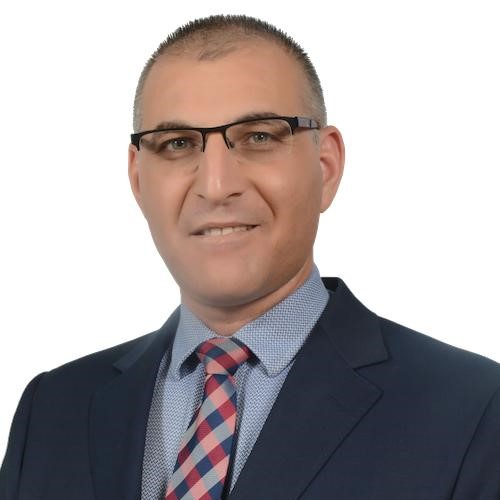
Mustafa Jarrar

Birzeit University, Palestine

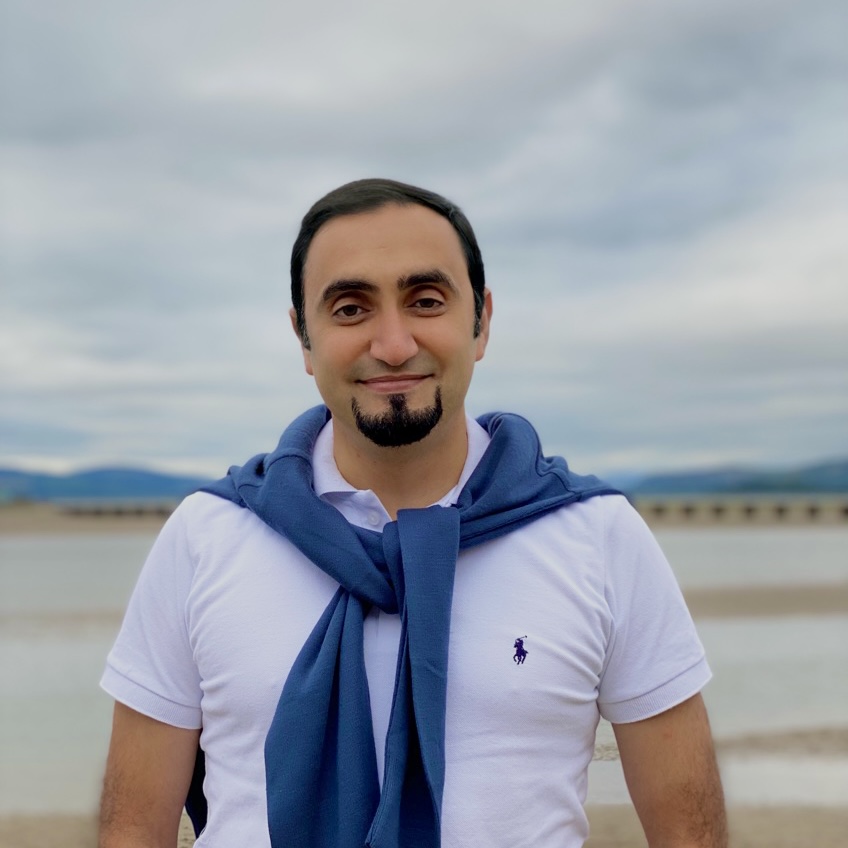
Mo El-Haj

Lancaster University, UK

Amal Haddad

University of Granada, Spain

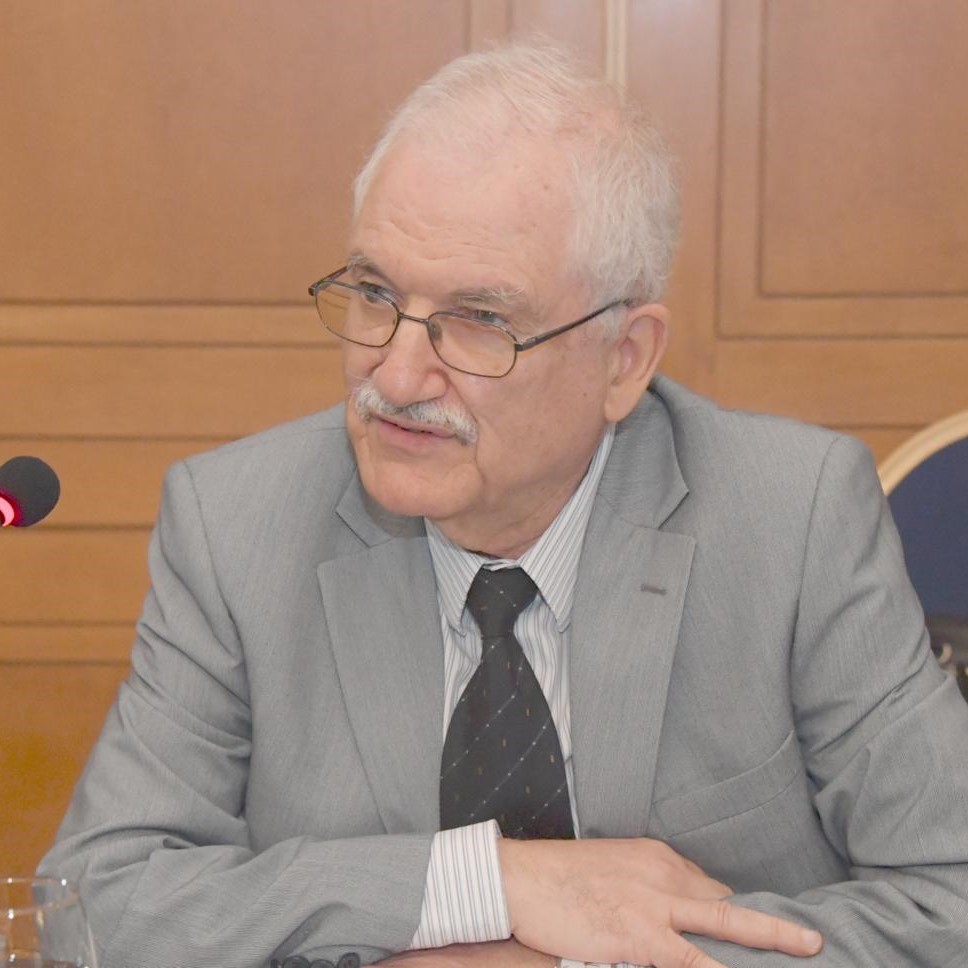
Camille Mansour

Institute for Palestine Studies, Lebanon

Paul Rayson

Lancaster University, UK

Khalil Simaan

University of Amsterdam

Serin Atiani

Princess Sumaya University, Jordan

Shadi Abudalfa

King Fahd University of Petroleum & Minerals (KFUPM).

Terry Regier

University of California

Program Committee

  • Abdelkader El Mahdaouy, Mohamed VI polytechnic University
  • Abdellah El Mekki, School of Computer Sciences, Mohammed VI Polytechnic University
  • Abdelrahim Qaddoumi, NYU
  • Abdulrahman Abdulsalam, University of Utah
  • Abed Alhakim Freihat, University of Trento
  • Adnan Yahya, Birzeit University
  • Ala Alazzeh, Birzeit University
  • Ali AlKhathlan, Assistant Professor King Abdulaziz University
  • Almoataz B. Al-Said, Cairo University
  • Amr Keleg, The University of Edinburgh
  • Areej Jaber, Technical University Khadouri
  • Ashraf Elnagar, University of Sharjah
  • Ayah Soufan, Strathclyde University
  • Azzeddine Mazroui, University Mohammed First, Faculty of Sciences
  • Badr AlKhamissi, EPFL
  • Baker Abdalhaq, Annajah National University
  • Basem Ezbidi, Birzeit university
  • Bassam Haddad, University of Petra
  • Bayan AbuShawar, Associate Professor-Cyber security Department-Al Ain University
  • Dana Abdulrahim, University of Bahrain
  • Dima Taji, Charles University, Faculty of Mathematics and Physics, Institute of Formal and Applied Linguistics
  • ElMoatez Billah Nagoudi, The University of British Columbia
  • Eyad Elyan, Robert Gordon University
  • Fadhl Eryani, University of Tübingen
  • Fadi Zaraket, American University of Beirut
  • Faisal Awartani, Insights for Research Polling and Training
  • Fatemah Husain, Kuwait University
  • Fatima Haouari, Qatar University
  • Fethi Bougares, LIUM- Le Mans Université
  • Fouzi Harrag, Ferhat Abbas University
  • Ghassan Mourad, libanese university
  • Go Inoue, Mohamed bin Zayed University of Artificial Intelligence
  • Habiba Dahmani, Mohamed Boudiaf University
  • Haithem Afli, ADAPT Centre, Munster Technological University
  • Hamada Nayel, Benha University
  • Ibrahim Abu Farha, University of Sheffield
  • Imed Zitouni, Google
  • Imene Bensalem, ESCF de Constantine & MISC Lab, Constantine 2 University, Algeria
  • Injy Hamed, Institute for Natural Language Processing, University of Stuttgart
  • Kamel Gaanoun, National Institute of Statistics and Applied Economics
  • Kamel Smaili, LORIA
  • Kaoukab Chebaro, Columbia University
  • Karim Bouzoubaa, Mohammed V University in Rabat
  • Khaled Shaalan, The British University in Dubai
  • Khalid Choukri, ELRA/ELDA
  • Khalil Mrini, Bytedance
  • Khloud Al Jallad, SySSR
  • Labib Arafeh, AlQuds University
  • Lama Nachman, Intel Labs
  • Lamia Hadrich-Belguith, ANLP Research Group, MIRACL Lab, FSEGS, Sfax University
  • Majdi Sawalha, The University of Jordan
  • Manar Alkhatib, British University in Dubai
  • Maram Hasanain, Qatar Computing Research Institute
  • Mo El-Haj, Lancaster University
  • Mohamed Lichouri, Centre de Recherche Scientifique et Technique pour le Développement de la Langue Arabe (CRSTDLA)
  • Mohamed Yahya, NLP Researcher
  • Mohammad Abuoudeh, Al Hussein Bin Talal University
  • Mohammed Attia, Google Inc.
  • Mohammed Khalilia, Birzeit University
  • Mohammed Salah Al-Radhi, Budapest University of Technology and Economics, Department of Telecommunications and Media Informatics
  • Mona Baker, University of Oslo
  • Moustafa Al-Hajj, Lebanese University
  • Muhammad Abdul-Mageed, The University of British Columbia
  • Munir Fakher Eldin, Birzeit University
  • Munther Dahleh, MIT
  • Nada Ghneim, Damascus University - Information Technology Engineering Faculty
  • Omar Shehabi, Yale Law School
  • Omar Tesdell, Birzeit University
  • Omar Trigui, University of Sousse in Tunisia
  • Owen Rambow, Stony Brook University
  • Radi Jarrar, Birzeit University
  • Radwan Tahboub, Palestine Polytechnic University
  • Raia Abu Ahmad, DFKI
  • Reem Suwaileh, Qatar University
  • Saad Ezzini, Lancaster University
  • Sabri Boughorbel, Qatar Computing Research Institute
  • Sahar Ghannay, CNRS, LISN
  • Salima Harrat, ENS Bouzaréah, Algiers
  • salima mdhaffar, LIA - University of Avignon
  • Samhaa R. El-Beltagy, Newgiza University/Optomatica
  • Sari Hanafi, American Univ of Beirut
  • Seif Mechti, ISSEPS
  • Serin Atiani, Princess Sumaya University for Technology
  • Shady Elbassuoni, American University of Beirut
  • Sultan Alrowili, University of Delaware
  • Susan Akram, Boston University
  • Tamer Elsayed, Qatar University
  • Thaher Gharabeh, Univeristy of Granada
  • Violetta Cavalli-Sforza, Al Akhawayn University
  • Wajdi Zaghouani, Northwestern University Qatar
  • Walid Magdy, The University of Edinburgh
  • Wassim El-Hajj, American University of Beirut
  • Watheq Mansour, The University of Queensland
  • Wissam Antoun, Inria
  • Yahya Mohamed Elhadj, Arab Center for Research and Policy Studies

Shared Tasks

In addition to paper submissions, the workshop will host shared tasks designed to advance NLP research on Nakba narratives. Each shared task will be coordinated by a dedicated organising team, independent from the main workshop organisers.
  • NakbaVirality – an NLP task on predicting the virality of social media posts, focusing on the sensitive discourse surrounding the Nakba and the recent Israeli war on Gaza.
  • NakbaArchiver – an NLPclassification task to determine whether a text, image, or video is related to the Israeli war on Gaza.

Sponsors